
Sewsunker "Papwa" Sewgolum
Born:12 December 1928 – 5 July 1978

Papwa, will mostly be remembered for his unusual swing, which subtracts from his truly great achievement, which was his fight against racial prejudices and white man rule.
Born in South Africa he grew up in a land where the ugly cruelty of an apartheid system held his progress back at every opportunity. Rather than letting the system beat him Papwa fought for his rights in the same way as Charlie Sifford did on the other side of the Atlantic.
Use link below:
https://www.billknowlesgolfart.com/post/african-american-stories-1

Where Charlie Sifford challenged the Caucasian law set by the American PGA in 1948 Papwa worked his way around the barriers in a less confrontational manner, using the help of white benefactors who recognized his enormous talent.. The other part of Papwa's inspiring story as said before, was his individualistic swing method. There is no mistaking the cross-handed ( or in British local language, cack-handed ) method he used throughout his fairly short career. Although not uncommonly used among the African continents caddies of this time, Papwa was able to take the powerful unconventional grip basis to a higher level.

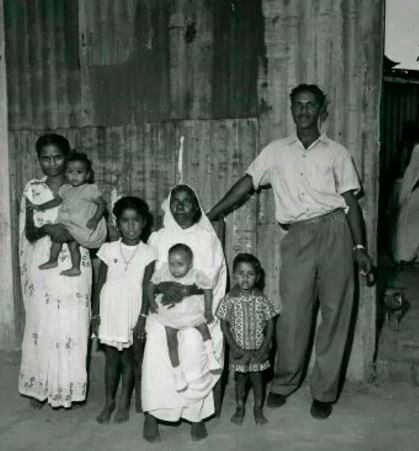
Born 1928 in Durban in the Natal province of South Africa into a family of sugar cane workers. He was a small child at birth, fairly normal for his ethnic Indian origin, and would only reach a size of 5'3" in later life. Unfortunately his tough beginning gave him a mother who was blind. While growing up as a child he was tasked to help his mother collect guava from the trees. Fortunately the fruit is rich in minerals and vitamins, giving enough sustenance for survival.

To add to the family misery Papwa's father died when he was just 13 years old, leaving him with the responsibility of looking after mother and younger brother. At this young age he had to leave school and find work. He found work as a caddy at the Beachwood Golf Club where he would remain for 15 years.

In his younger caddy days there were times when he brought home as little as 75 cents per week, meaning the family often had to go without food. As time passed the money increased and his family support became stable. Papwa had taken up the game as well and his playing prowess was becoming legendary.

He practiced when he could, improving his skills, and started to enter for minor local tournaments. He was soon winning, with his first ever prize being a crate of cold drinks!
Papwa's breakthrough came when he received the support of Beachwood golf club member Graham Wulff. Impressed by Sewgolum's great talent, Wulff arranged for him to try to try and qualify in the British Open of that year.

Graham Wulff, a successful South African business man and chemist owned and created the company that sold “Oil of Olay.”
Possessing a pilots license he personally flew Papwa in his 6 seater Piper Comanche to his first European tournaments.
It was 1959. Dressed in his Durban Indian Golf Club blazer, Papwa bade farewell to his family on the 27 May 1959 at the Stamford Hill aerodrome.

Graham Wulff and his wife Mavis accompanied Papwa that saw them stopping over at Beira, Dar-es Salaam, Khartoum, Cairo, Tripoli, Rome and eventually London where Papwa would begin his charge on Europe with the British Open at Muirfield.

It was the year his countryman Gary Player won the first of his 9 majors, and while both Player and fellow countryman Bobby Locke took the headlines, Papwa was busy qualifying with a 71 and 76 on a local Muirfield course.
His story was taken up by the press, and, given his unflattering golfing development, Papwa charmed the British media that reveled in the story that a once bare footed caddy from Riverside, Durban could possibly win one of golf’s most coveted titles. Yet,despite his wonderful performance to qualify for the Open, Papwa failed to make the cut for the last two rounds shooting a poor 79 and 73. Nevertheless Papwa was not finished yet. He was to play three further European events. The next one, the French Open was another sad story, his entry was too late! It transpired that he failed to inform the others that he could not read or write. His unschooled childhood days had caught up with him. In fact Papwa had been given extra support by his fellow villagers. They had come together and collected a small amount of money to help Papwa with his expenses. Yet more importantly he had been trained to sign an autograph and to deal with the European Cultural habits. A Durban Indian waiter taught Papwa how to use a fork and knife while also learning what to use for a particular food course. Clearly this alone must have been an incredibly frightening experience for Papwa whose indentured ancestry ate food by hand.
Of course the Dutch Open ( presently the KLM Open ) had to now be a different story!
The tournament was played at the Koninklijke Haagsche Golf club.

Showing no signs of nerves, Papwa led the first round and announced himself with a score of 67.

Rather than an expected collapse Papwa maintained his focus and kept his nerves together to card a second round of 69. That made the partisan crowd nervous as he was now leading the tournament by three stokes on Gerard de Wit, the current Dutch Champion. On the third day Papwa slowed the blistering pace of the first two rounds down. He shot a below average score of 74, giving his competitors a chance.
Yet he had done enough on those first two days to achieve a win. Even Papwa`s last round of 73 and a 283 total gave him victory as the nerves of the last round took its toll on everyone. The stunned partisan Dutch crowd had to watch there champion De Wit lose by a single stroke.

This victory made international news as Papwa Sewgolum became the first person of color to win a major European professional tournament. It propelled him into the spotlight, leading to his participation in the previously whites-only Natal Open in South Africa in 1963. Papwa was now 31, already an advanced age to be winning for the first time. The record books now tell us what the preceding events would be......
Part two - The benefits and flaws of the cross-hand method. A study of Papwa's swing using film, photography and art.


Comments